eBird
FAQs
BOLIVIA
14 DAYS BIRDING ITINERARY: FROM LOWLANDS TO ALTIPLANO HIGHLANDS

Red-fronted Macaw © Paul B. Jones
Bolivia is in the center of South América. It’s one of the richest countries in terms of bird species worldwide because of its great number of species, over 1400. This incredible avifauna richness as a landlock country is in part due to the presence of many ecoregions and habitats with high topography and climatic complexity. Bolivia has lot of intact wildernesses because very small population for a big country and most of the population lives in the biggest cities, therefore, the countryside is sparsely populated or almost abandoned which greatly helps the conservation of nature and its natural resources, making the country a very attractive site for nature tourism. Thanks to its privileged number of species, it makes the country a very attractive place for bird lovers because the country concentrates many range-restricted species and shares a lot of them with its five neighboring countries (Brazil, Paraguay, Argentina, Chile and Perú) making the country even more interesting.
This trip is designed to discover some of the most representative avifauna of Bolivia starting in the southeast lowlands of Santa Cruz de la Sierra Department covering ecoregions like The Chaco and The Chiquitanía, moving south to reach the Boliviano-Tucumano Forest and the Yungas of south Andes of Santa Cruz and Cochabamba departments. From here we’re going to head west of the country to reach the Inter Andean dry valleys, Polylepis Woodland and the Humid Puna up in the highlands of Cochabamba department. From Cochabamba we’ll keep going northwest to reach the La Paz Department, here we’ll cover other ecoregions like The Altiplano (Highplain) up in the highlands, then we’re down in elevation to reach the Yungas of the north Andes and will finish in the Inter Andean dry valley of La Paz City. The elevational range that the tour covers is from 1300 to 14 850 feet above sea level (400 – 4500 m.a.s.l.).


Bolivia Satellite Map by Google Earth with all birding spots that we’ll cover in the tour.
DAY 1: ARRIVAL DAY IN SANTA CRUZ DE LA SIERRA CITY & WELCOME DINNER FOR ALL PARTICIPANTS
Pick up at Viru Viru international airport (airport code: VVI) and drop off at the hotel. Once all participants have arrived in Santa Cruz, in the late afternoon we’ll have a welcome dinner for all participants. Santa Cruz de la Sierra is one of the main international airports to enter Bolivia and is in the southeast lowlands of the country.
Overnight Santa Cruz
DAY 2: LOMAS DE ARENA, SANTA CRUZ BOTANICAL GARDENS, LAGUNA GUAPILO & VIRU VIRU INTERNATIONAL AIRPORT GRASSLANDS
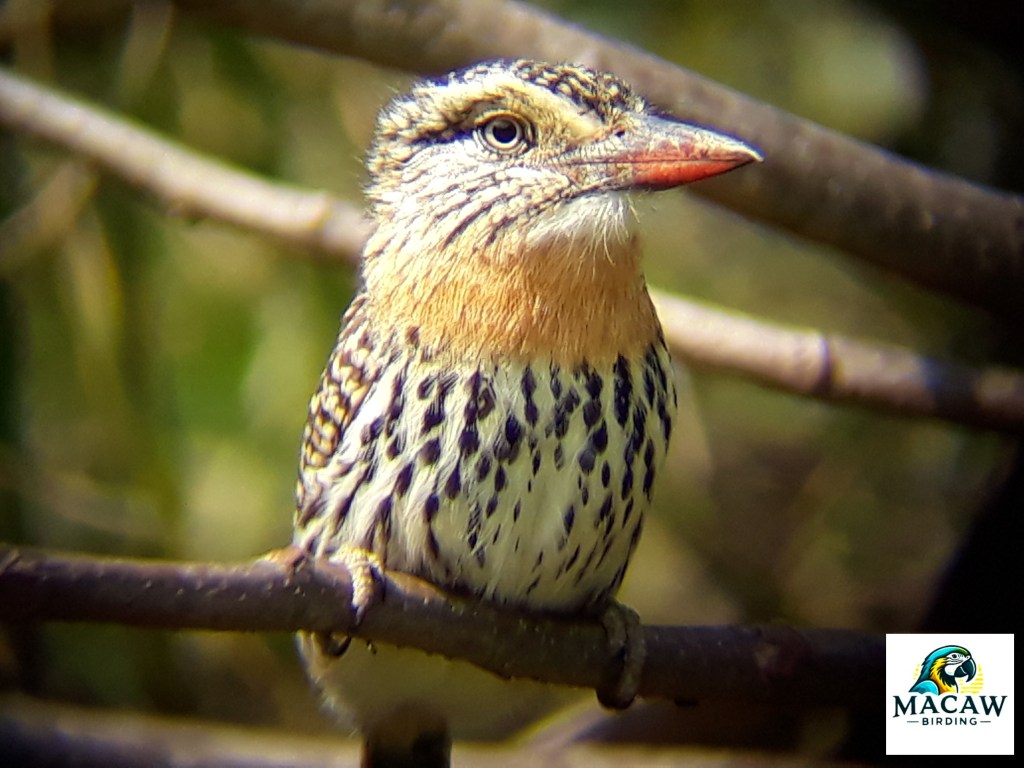
Spot-backed (Chaco) Puffbird © Juan Carlos Crespo
This morning our birding adventures will begin at Lomas de Arena Regional Park. Lomas de Arena is in the south lowlands of Santa Cruz city. A great number of birds have been recorded due to many mixed habitats dominated by dry thorn forest, wooded grassland, semihumid to semideciduos forest, sand dunes, wetlands, marshes and some lagoons as well. All these different habitats are part of the Chaco and Chiquitanía ecoregion complex. Our goal will be to search for Chaco and Chiquitanía specialist like Spot-backed Puffbird (Chaco Puffbird), White-eared Puffbird, Chotoy Spinetail, Campo Flicker, White Woodpecker, Barred Antshrike, Pearly-vented Tody-Tyrant, Chalk-browed and White-banded Mockingbird, Red-legged Seriema, Ash-colored Cuckoo, Gray-cowled Wood-Rail, Comb Duck, Brazilian Teal and many others.
By mid-morning we’ll move to another great place, the Botanical Garden. The Botanical Garden has an impressive number of birds as well. Here the most dominant forest is semi-humid and semi-deciduous transitional forest that’s part of the Chiquitanía ecoregion, an ecotone between Amazonia and Chaco. Here we will search for Chiquitanía specialist like Bolivian-slaty Antshrike, Rufous-fronted Thornbird, Buff-throated and Straight-billed Woodcreeper, Fawn-breasted Wren, Yellow-chevroned Parakeet, Chopi Blackbird, Plush-crested and Purplish Jay, Little Woodpecker, Bare-faced Ibis, Blue-crowned Trogon, Cocoi and Whistling Heron, Red-crested and Red-capped Cardinal, etc. Later we’ll move to Laguna Guapilo, a very interesting wetland with an incredible number of birds and it is located near the Botanical Garden. Some very interesting species here are White-winged and Red-fronted Coot, Limpkin, Fulvous Whistling-Duck, Southern Screamer and many others.
Overnight Santa Cruz.
DAY 3: REFUGIO LOS VOLCANES (AMBORÓ NATIONAL PARK)
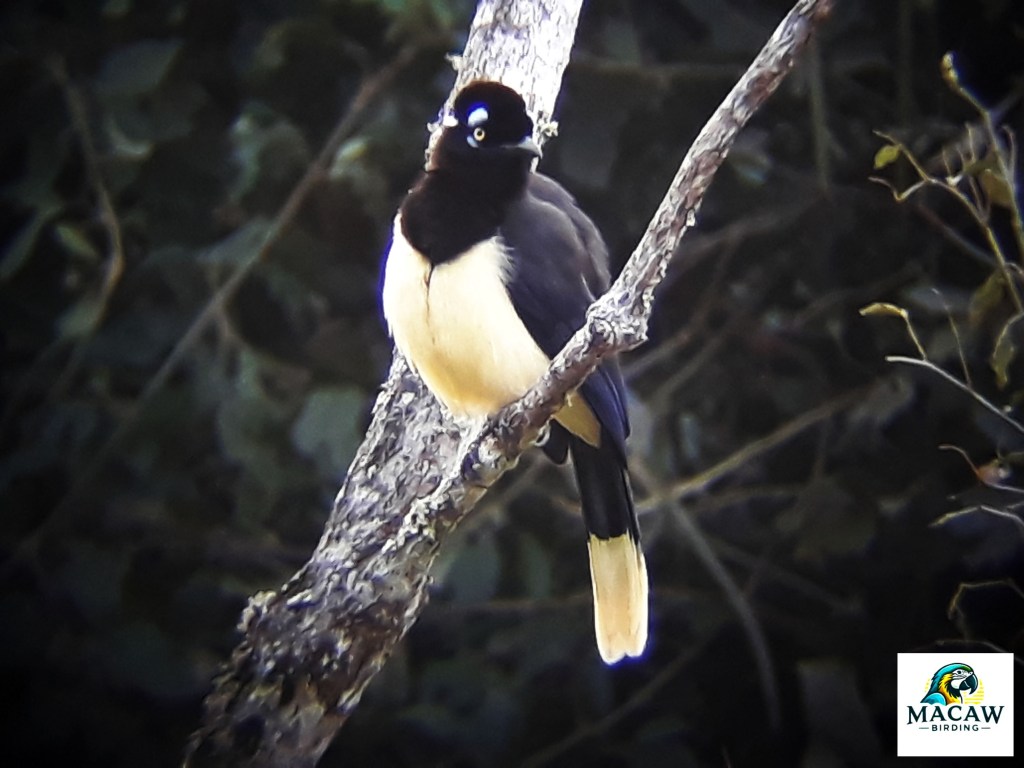
Plush-crested Jay © Juan Carlos Crespo
We will leave the city very early in the morning and will drive heading towards the southeast to Refugio Los Volcanes. Refugio Los Volcanes is a private reserve that’s located at the main entrance of Amboró National Park. This private refuge has a very impressive landscape of tall semi humid and dry mountain forest that’s part of Yungas and Chaco Serrano ecological region and it has very impressive number of bird species recorded.
Arriving to the Refuge, we’ll be birding at the upper part of the Reserve at the main entrance and look for Mustached Wren, Short-tailed Antthrush, Black-goggled Tanager, Green-cheeked Parakeet, Black-capped Antwren, Gray and Brown Tinamou, Slaty Gnateater, Red-necked Woodpecker, etc.
Afternoon we’re going to birdwatch in the lower part of the reserve and here the highlights are the Bolivian Tapaculo, Amazonian Motmot, Western Fire-eye, Ocellated Woodcreeper, White-necked and Rufous-bellied Thrush and others. At night we’ll go owling in search of the Rufous Nightjar, Rufescent Screech-Owl and possibly Tawny-bellied Screech-Owl.
Overnight Refugio Los Volcanes
DAY 4: REFUGIO LOS VOLCANES & SAMAIPATA FOOTHILLS

Military Macaw © Paul B. Jones
Our morning at the Refugio starts off just at dawn in search of Band-bellied Owl, Black-banded Owl and Ferruginous Owl. Later we’ll search for Military Macaw, Yungas Manakin, Bolivian Recurvebill, Two-banded Warbler, White-throated Pipin-Guan, Chestnut-eared Aracari, Chestnut-backed Antshrike, Moss-backed Sparrow, Dusky-green Oropendola, Golden-crowned Warbler, Rufous Casiornis, Ochre-cheeked Spinetail, White-throated and Channel-billed Toucan.
After lunch we will leave the Refugio and drive west to another very cool and new location, Samaipata Foothills. Samaipata is a big and very touristic area and is located on the west of Santa Cruz de la Sierra department at 1644 m.a.s.l. (5425 feet a.s.l.). The habitats there are semi- humid to wet mountain forest that’s part of the Yungas and Boliviano-Tucumano Forest Ecoregion on the Southern Andes.
Once we arrive to Samaipata, will go birding at a private place El Refugio del Colibrí (The Hummingbird Refuge). This pretty refuge is owned by a couple of friends who are birders since a long time ago. They restored farming land into a secondary forest, planting very interesting native plants to attract hummingbirds mainly. At this small reserve it is possible to see very interesting hummingbirds and other birds like Planalto Hermit, White-vented Violetear, White-bellied Hummingbird, Great-billed Hermit, Saffron-billed Sparrow and others.
Overnight Samaipata
DAY 5: QUIRUSILLA PROTECTED AREA & SAMAIPATA-MAIRANA ROAD
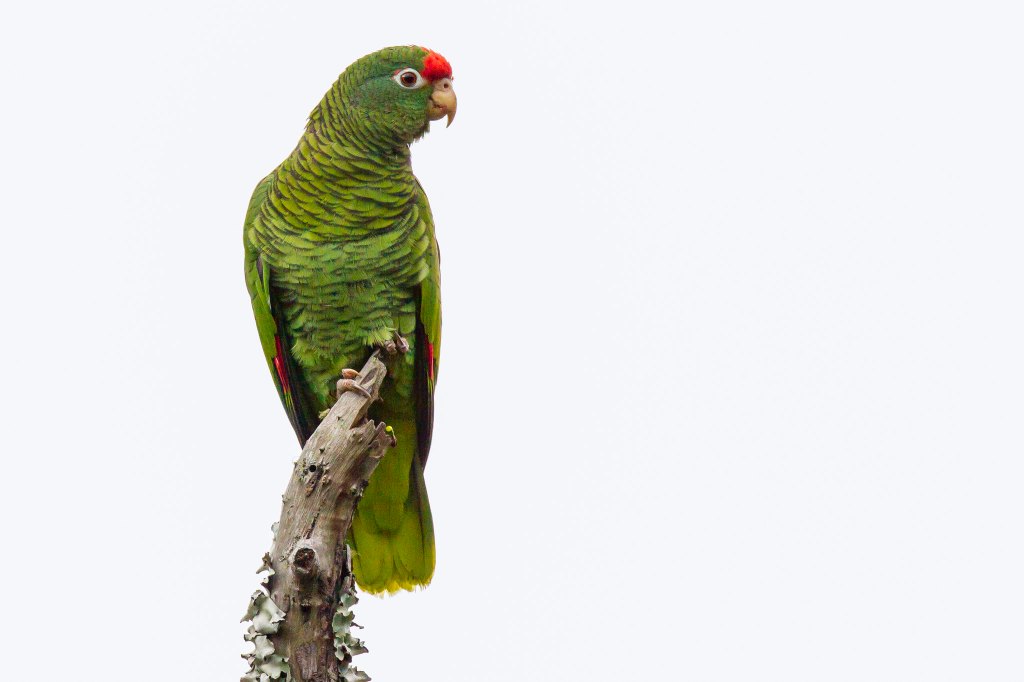
Tucuman Amazon © Paul B. Jones
Early departure to Quirusillas protected area. This place is located in the Quirusillas Municipality south of Samaipata. Once at the place, we’ll look for Tucuman Amazon, White-throated Antpitta, Green-throated Tanager, Ochre-faced Tody-Flycatcher, Bolivian Tyrannulet, Red-faced and Yungas Guan, Variable Antshrike and many others. Later by Esmeralda lagoon, we’ll search for some waterbirds like Masked Duck, Wattled Jacana and then in the swampy area of the lagoon Rufous-sided Crake and Plumbeous Rail.
In the afternoon we will be birding in a secondary road between Samaipata and Maraina. Here we will focus searching for Giant Antshrike, Sooty-fronted Spinetail, Moss-backed Sparrow, Ultramarine Grosbeak, Huayco and Andean Tinamou, Grassland Sparrow, Spot-breasted Thornbird, Ocellated and white-barred Piculet, Slender-tailed Woodstar and possible Red-tailed Comet.
Overnight Samaipata
DAY 6: SIBERIA CLOUD FOREST – EL TAMBO AREA & RED-FRONTED MACAW RESERVE
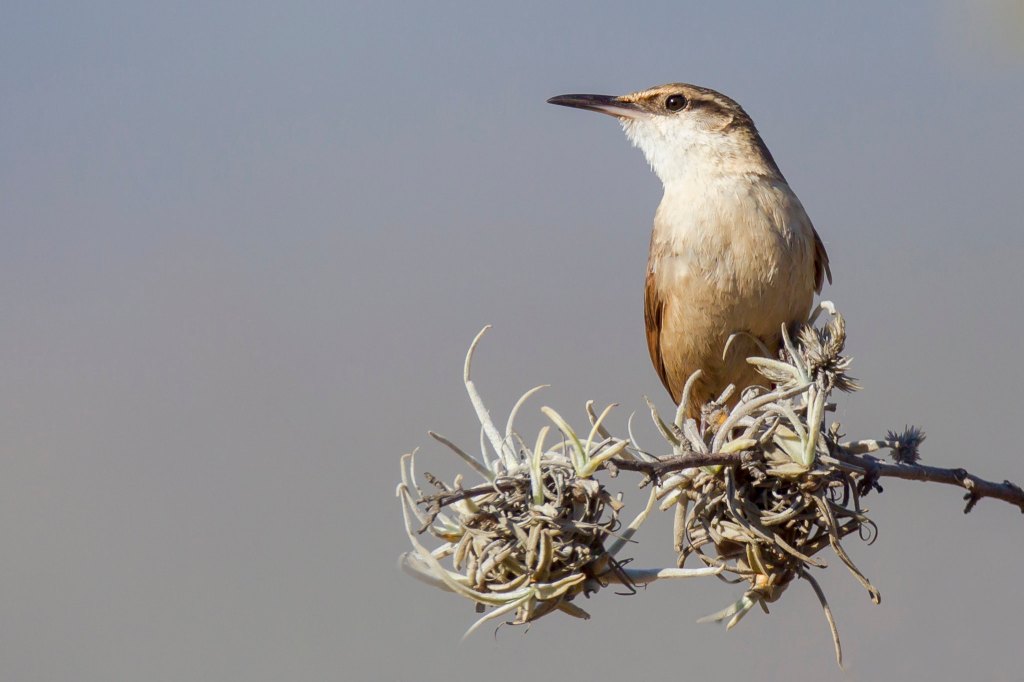
Bolivian Earthcreeper © Paul B. Jones
Today we’ll departure early in the morning to Siberia Cloud Forest. Once we arrive to the first spot, we’ll look for Yungas Pygmy-Owl, Bolivian and White-browed Brushfinch and White-eared Solitaire. Later we’ll move to a different spot to search the very shy Rufous-faced Antpitta, Stripe-crowned and Light-crowned Spinetail, Pale-legged Warbler, Blue-capped Puffleg, Scaled Metaltail, Common Chlorospingus, Chestnut-bellied Mountain Tanager, etc. After birding most of the morning on this site, around mid-day we will head back to the main road and will drive to birding at lower elevation in a farming and dry forest area called El Tambo. Here we’ll search for Bolivian Earthcreeper, Rufous-capped Antshrike, Southern Mouse-colored Tyrannulet, Black and chestnut Warbling-Finch, White-crested Tyrannulet, Masked Gnatcatcher, and many others.
Later we’ll head toward the west to go birding at Red-fronted Macaw Reserve. This community reserve is in southern Cochabamba Department in the Inter-Andean Dry Valleys ecoregion represented by deciduous forest and woodland. This reserve is the most important for the conservation and protection of the very threatened endemic Red-fronted Macaw because it protects the largest population of this species along its natural distribution. The reserve is home of another Bolivian endemics bird, the Monk Parakeet and Bolivian Blackbird as well.
After arriving at this pretty reserve in the afternoon, we’re going birding by the main area of the lodge and the river. Red-fronted Macaw, Bolivian Blackbird, Monk Parakeet are our highlights. Additional species here are White-fronted Woodpecker, Golden-billed Saltator, Sayaca Tanager, Gray-crested Finch, Mitred Parakeet, Glittering-bellied Emerald, White-tipped Plantcutter and others.
The last birding event of the day will be the search for Scissor-tailed Nightjar at night, they’re very active from dusk and part of the rest of the night and they like to sit on the ground around secondary roads.
Overnight Red-fronted Macaw Reserve
DAY 7: RED-FRONTED MACAW RESERVE & MAIN ROAD TO COCHABAMBA CITY

Red-fronted Macaws © Juan Carlos Crespo
Early in the morning we’ll search first for the Ferruginous Pygmy Owl and then will take a short hike to the bottom of huge cliff to see very noisy mixed flocks of Macaws, Parrot and Parakeets. The first goal will be to find the beautiful Red-fronted Macaw flying by the cliff where they roost. Sometimes they like perching up on tall trees and on the ground because they love to eat peanuts. At the same spot we’ll enjoy observing the Monk Parakeet and Mitred Parakeet, some Turquoise-fronted Parrots, some Bolivian Blackbird and White-tipped Doves. Later we’ll look for Greater Wagtail-Tyrant, Black-capped Warbling Finch, Blue and Yellow Tanager, White-fronted Woodpecker, Gray-crested Finch, Creamy-bellied Thrush, Picui-ground Dove, Sayaca Tanager, Masked Gnatcatcher, Green-cheeked Parakeet and many others.
In the afternoon we’ll drive to Cochabamba city and birding off the main road on agricultural areas where is possible to see Spot-winged Dove, Creamy-breasted Canastero, Andean Flicker, Puna Ibis, Grayish Baywing, Black-winged Ground Dove and sometimes Chilean Flamingos in small lagoons.
Overnight Cochabamba.
DAY 8: SAN MIGUEL POLYLEPIS FOREST, CERRO TUNARI & LAGUNA ALALAY
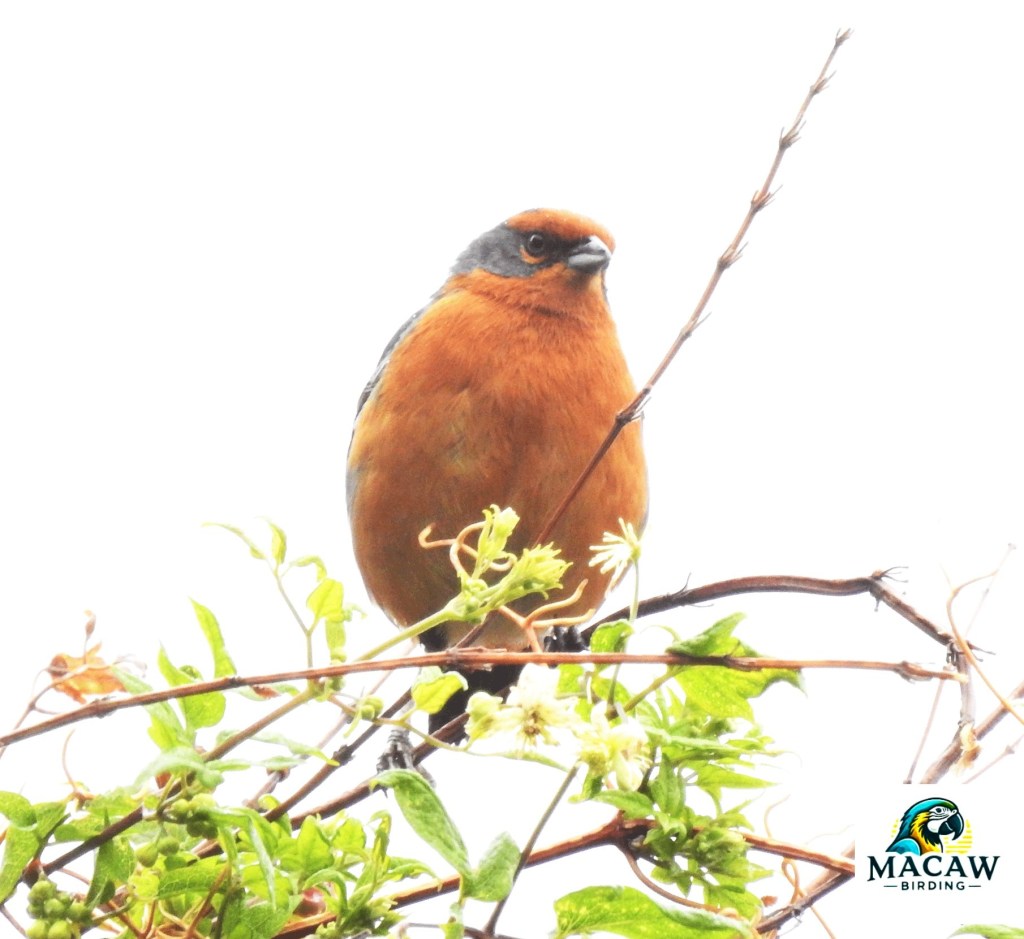
Cochabamba Mountain-Finch © Juan Carlos Crespo
Very early departure to San Miguel Polylepis Forest. On the way up to San Miguel we’ll pass different habitats between small patchy shrubs forest and Eucalyptus or Pine trees and agricultural areas along the secondary road. Here, we will stop for birding and searching for the Great-Pampa-Finch, Red-tailed Comet, Gray-hooded Parakeet, Olive-crowned Crescentchest and some range-restricted species like Bolivian and Rufous-sided Warbling Finch and the most looked species, the Cochabamba Mountain-Finch. Moving up on elevation we’ll change the habitat to Polylepis Forest. Here we’ll look for another very special bird and country endemic the Gray-bellied Flowerpiercer, Polylepis specialist like Giant Conebill, Tawny and Brown-capped Tit-Spinetail, Maquis Canastero, Rock Earthcreeper, Rufous-bellied Mountain-Tanager, Fulvous-headed Brush-Finch, Greenish Yellow-Finch and others.
After birding at the Polylepis Forest, we’ll keep ascending on elevation where the lanscape changes completely to a different habitat, the Puna Altoandina or Highlands. All the trees are gone already, and the new habitat is very rocky, grassy and there are some small glaciers lagoons around. Here we’ll look for Andean Goose, Andean and Ornate Tinamou, Glacier Finch, Black-hooded Sierra Finch, Slender-billed Miner, Cordilleran Canastero, Ochre-naped Ground Tyrant and if we’re lucky we’ll spot the rare Boulder Finch as well.
Around noon, we’ll head back to the city and drive direct to Laguna Alalay. Laguna Alalay is an artificial freshwater located at the south of the city. Here we have many different and interesting habitats like shrubs, open grassy areas, dispersal trees and Totora Reeds at lagoon shores. All different habitats are important for resident birds and boreal migratory birds as well. We’ll focus first on some waterbirds like Rose-billed Pochard, White-tufted and Silvery Grebe, Silver and Cinnamon Teal, Red Shoveler, White-cheeked Pintail and sometimes Puna Ibis, etc. Many-colored Rush Tyrant, Wren-like Rushbird and Plumbeous Rail by the Totora reeds. Bare-eyed Ground Dove, Rufous Hornero, Grayish Baywing and many others.
Overnight Cochabamba.
DAY 9: CORANI DAM VICINITY & TABLAS MONTE AREA

Hooded Mountain-Toucan © Alex Boas
Very early morning departure to Corani general area. The most dominant landscape here is treeline scrub patches and agricultural areas around. Here, we’re going to focus first for the endemic species like Black-hooded Sunbeam, Gray-bellied Flowerpiercer, Bolivian Brushfinch, the pretty little furnarid Black-throated Thistletail and the new antpitta endemic to Bolivia, the Bolivian Antpitta (recently split from Rufous Antpitta). Other birds around the same spot are Chestnut-bellied and Scarlet-bellied Mountain Tanager, White-crested Elaenia, Violet-throated Starfrontlet, Great Sapphirewing, Puna Tapaculo, etc.
After birding at Corani Dam area, we’ll drive to the main road and drive head down to Tablas Monte area. Tablas Monte is a dense temperate mountain forest with fews farming areas around. Here we’re going birding a long a dirty road trying for the Hooded Mountain-Toucan, Moustached Flowerpiercer, Black-winged Parrot, Rufous-faced Antpitta, Diademed and Trilling Tapaculo, Orange-browed Hemispingus, White-browed Conebill, Gould’s Inca, Amethyst-throated Sunangel, Band-tailed Fruiteater, Chestnut-crested Cotinga, Maroon-belted Chat-Tyrant, Fulvous Wren, Citrine Warbler, Rust-and Yellow Tanager, Plushcap and many others. Late afternoon we’ll drive back to Cochabamba city.
Overnight Cochabamba.
DAY 10: DRIVE TO ORURO CITY, BIRDING AT LAKE URU URU & VICINITIES
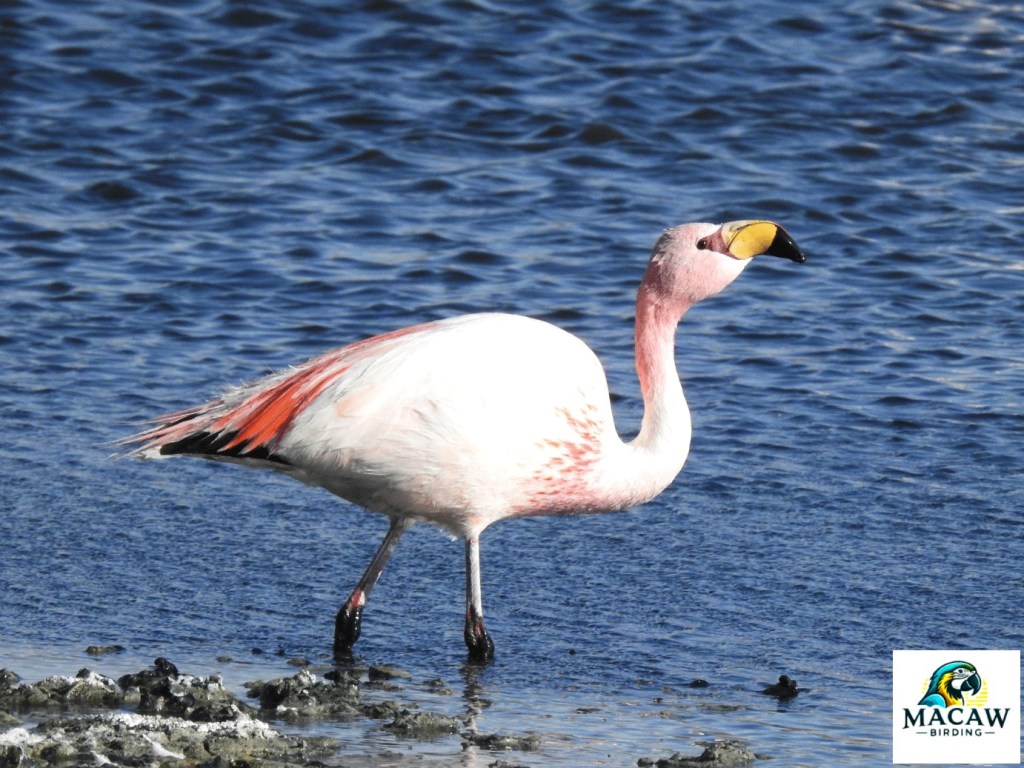
James’s Flamingo © Juan Carlos Crespo
Today we’re going to leave the city early and venture into a very different landscape and habitats passing through the dry Inter-Andean valley to a shrub dry area ascending to desertic Highlands and finally reach the Altiplano (Highplain) with huge flat plains and isolated mountains on the horizon. Once we arrive at the first city located right at the altiplano Oruro, we’ll drive to the very singular and unique saltwater lake Uru Uru. Here we’ll search first for the beautiful James’ Flamingo, Andean and Chilean Flamingo, Andean Avocet, Puna Pipit, Plain-mantled Tit-Spinetail, Plumbeous and Mourning Sierra-Finch, Bright-rumped and Puna Yellow-Finch, Black-necked Stilt, Cream-winged Cinclodes, Black Siskin, Mountain Parakeet, Brown-backed Mockingbird, Golden-spotted Ground Dove and possible Lesser Rhea.
Early afternoon we’ll leave this unique lake and will keep moving toward the west on the way to La Paz city. Along of Oruro – La Paz highway, we’re going to have some stops and search for the Tawny-throated Dotterel and lots of Puna birds.
Overnight La Paz.
DAY 11. LAKE TITICACA (SACRET LAKE) & SORATA VICINITY

Titicaca (Flightless) Grebe © Alex Boas
Early departure to the beautiful Titicaca freshwater Lake located high up in the Altiplano. The most dominant landscape on the way to the lake will be huge flat areas of dry grasslands. Once we arrive at the lake, we’ll focus on seeing many beautiful waterbirds and landbirds like Titicaca Grebe, Andean Flamingo, Giant and Slate-colored Coot, Common Gallinule, Andean and Cinnamon Teal, Andean Duck. Around Totoras Reeds Many-colored Rush Tyrant, Wren-like Rushbird, Grassland Yellow-Finch and Yellow-winged Blackbird. By shores and in the open land Andean Negrito, Peruvian and Ash-breasted Sierra-Finch, Puna Plover, Puna Pipit, Cinereous Harrier and possible Least Seedsnipe.
In the afternoon, we’ll drive to Sorata Vicinity heading north on the way to Illampu Peak, one of the highest Bolivia’s mountains. The habitat here is humid Puna mixed with dry shrubs. We will focus on searching for another country endemic and very restricted to a small area in Bolivia, the Berlepsch’s Canastero and other birds around like Black-throated Flowerpiercer, White-winged Black Tyrant, Huayco Tinamou and sometimes Ornate Tinamou too, ground tyrants, ground doves, Miners and many species of waterbirds around small lagoon off the road.
Overnight La Paz.
DAY 12. LA CUMBRE, OLD COROICO ROAD & COROICO VICINITY
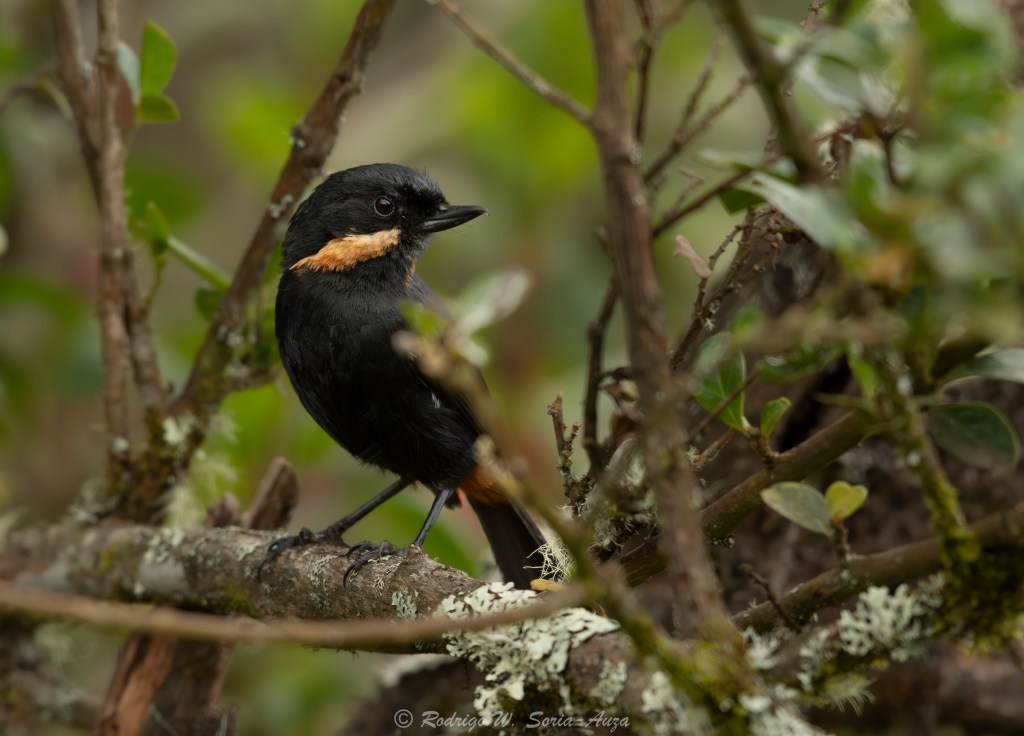
Moustached Flowerpiercer © Rodrigo W. Soria Auza
Early departure from La Paz to La Cumbre Highlands heading north of La Paz Department to cross the Central Cordillera on the way to old Coroico Road and Coroico Vicinity. Along La Cumbre highway, we’re going to bird off the road in the open grassland and lagoons to see coots, ground tyrants, Andean Swallow, Andean Goose, Crested Duck, Streak-throated and Scribble-tailed Canastero and possibly Gray-breasted and Rufous-bellied Seedsnipe as well.
Later we’ll keep rolling down on the main road to reach first the highland forest, a very different landscape with steep foothills and small patches of vegetation that descend significatively on elevation and reach the famous North Yungas of La Paz. The Yungas of La Paz are on the northeastern slopes of the Andes. In between La Cumbre and the upper Coroico road we’ll stop in a transitional area between the Altiplano and the Highlands Forest to search for some very rare birds like Stripe-headed Antpitta, Olivaceous Thornbill and the Endangered Ash-breasted Tit-Tyrant and others.
By midmorning we’ll venture into the very famous Old Coroico Road. This new place it’s a great hot spot of birding where are very interesting and some range-restricted species like Scimitar-winged Piha, Golden-collared Tanager, Buff-thighed Puffleg, Orange-browed and Three-striped Hemispingus, White-collared Jay, Moustached Flowerpiercer, Versicolored-Barbet, Band-tailed Fruiteater, Blue-banded Toucanet and some more spread species like Scarlet-breasted Fruiteater, Rufous-capped Thornbill, Chestnut-crested Cotinga, Black-eared Hemispingus, etc.
In the afternoon we’re going to move into a lower area at Coroico town to look for the Upland Antshrike, Southern Emerald-Toucanet and possible Black-capped Tinamou, Cabanis’s Spinetail, Sepia-capped Flycatcher, Chestnut-crowned Becard, Green-backed Becard, Pale-breasted Thrush, Sharp-tailed Streamcreeper, Black-faced Tanager, Yellow-rumped Antwren and many others.
Overnight Coroico town
DAY 13. COROICO VICINITIES, OLD COROICO ROAD & AFTERNOON VALLE DE LAS ANIMAS (VALLEY OF THE SOULS) LA PAZ CITY
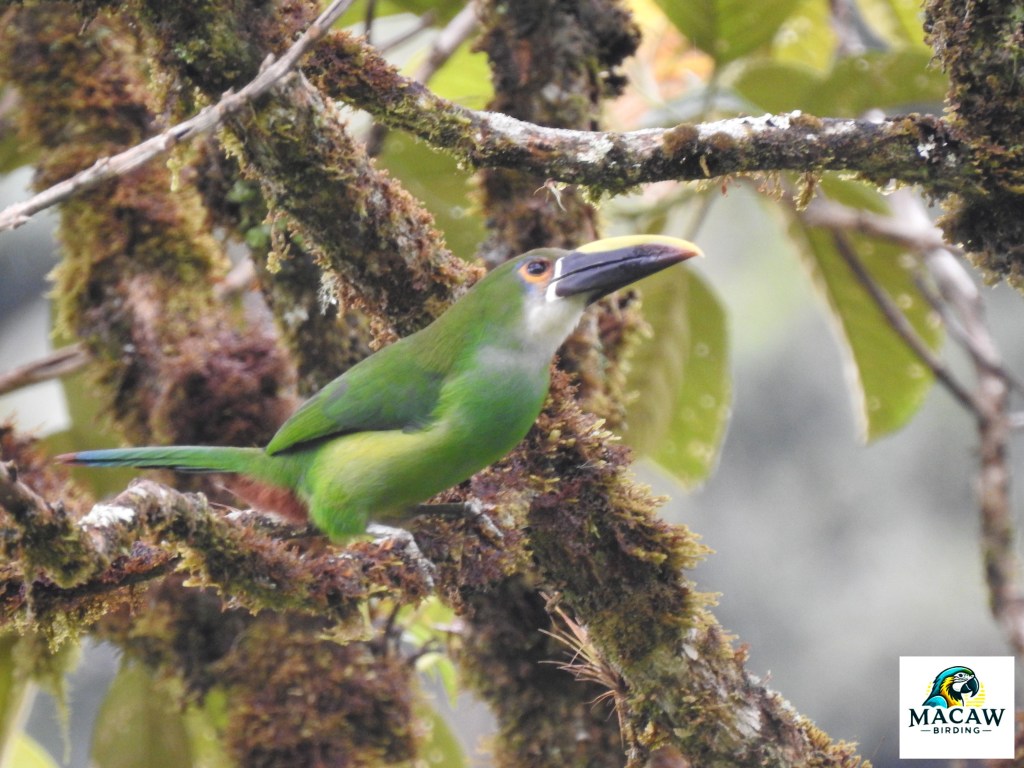
Southern Emerald Toucanet © Juan Carlos Crespo
Morning birding in Coroico’s vicinities. We’ll search for species we have not seen the day before. Then we’ll leave the town and drive back to La Paz. On the way back to La Paz we’ll birding on the Old Coroico Road again.
Afternoon we’ll visit a unique landscape and scenery resembling the moon, called Valle de las Animas (Valley of the Souls) located in the south of La Paz city where we’ll search for the beautiful Andean Hillstar and others interesting birds like Peruvian Sierra Finch, Spot-billed Ground Tyrant, d’Orbigny’s Chat-Tyrant, etc.
Overnight La Paz city
DAY 14. FINAL DEPARTURES
Breakfast farewell in the morning at the hotel and last morning together to say goodbye to everyone. HASTA LA VISTA AMIGOS!!!!
IMPORTANT TOUR ISSUES
DOCUMENTS YOU WILL BE REQUIRED BEFORE STARTING TOUR
*You will need a current passport and validity at least six months before the expiration
*International Certificate of Yellow Fever Vaccination.
*US citizen will require a VISA to enter to Bolivia. This procedure is possible online but may be delayed or very slow. I recommend doing it when you arrive in the country. Please click on the link to the Bolivia immigration webpage https://www.boliviawdc.org/en-us/consular-affairs/visas/tourist-visa to look on all requirements you will need and present at the time to do the procedure at the Immigration Counter at Viru Viru International Airport, Santa Cruz de la Sierra.
SIZE OF THE GROUP
SOLO to eight people
ACCOMMODATION
Regular to comfortable
INCLUSIONS
*All meals, starting with dinner on day one and finishing with breakfast on day fourteen.
*All lodgings during the tour.
* Private local guide and private transport.
*All entrances fees to private reserves and National Parks.
* Water during the whole trip. We highly recommend bringing your own bottle to avoid generating garbage.
*Group transfer service from our hotel in La Paz city to the El Alto International Airport (airport code: LPB)
EXCLUSIONS
*International and domestic flights are not included.
*Visa fees
*Drinks
*Items for personal use
*Phone calls, laundry services, etc.
HEALTH
Required good health conditions because we’re going to spend many hours on foot walking on dirty roads. We may have hot temperatures in the lowlands and very cold temperatures in the highlands.
BOOKING MODIFICATIONS
Requests for modifications to your reservation, such as date changes or participant adjustments, are subject to availability and may incur additional fees. We will do our best to accommodate your request.
FORCE MAJEURE
In the event of unforeseen circumstances or force majeure events (e.g., natural disasters, government actions, pandemics, etc.) that prevent you from participating, we may offer rescheduling options or travel credits for future use.
TRAVEL INSURANCE
We highly recommend purchasing travel insurance to protect your investment in case of unexpected cancellations due to personal emergencies, health issues, or other unforeseen events.
If you have any questions or need further assistance about this tour, please don’t hesitate to contact us.
Thank you very much for choosing Macaw Birding, and we look forward to providing you with exceptional experience!!!!.
Contact
Juan Carlos Crespo
Mobile: (+ 593) 985800580
Email: juancarloscrespo@macawbirding.com
Quito, Ecuador

 macawbirding.com