eBird
FAQs
ECUADOR
8 DAYS BIRDING ITINERARY: FROM ANDES HIGHLANDS TO CHOCÓ LOWLANDS

Guagua Pichincha Mountain © Juan Carlos Crespo
Get ready for the birding adventure of a lifetime! This eight-day itinerary, Northern Ecuador: From Andes Highlands to Chocó Lowlands, takes you on a spectacular journey through some of the most biodiverse regions on Earth. Imagine waking up to the songs of the Andean Cock of the Rock and witnessing the brilliant flash of a Black-breasted Puffleg hummingbird.
Your journey starts high in the Andes at Yanacocha Reserve, home to rare and endemic species. From there, you’ll descend into the enchanting cloud forests of the Tandayapa and Mindo valleys, famous for their stunning variety of hummingbirds and colorful tanagers. You’ll then explore the Chocó lowlands, a unique ecosystem where you’ll look for elusive birds like the Long-wattled Umbrellabird and the Chocó Poorwill.
This is more than just a trip; it’s an immersive experience designed for both seasoned birders and nature lovers alike. With expert guides and carefully chosen locations, you’ll not only see incredible birds but also gain a deep appreciation for Ecuador’s rich natural heritage. Sign up now and prepare to be amazed!
DAY 1: RESERVA YANACOCHA (JOCOTOCO) & HUMMINGBIRD ECOROUTE
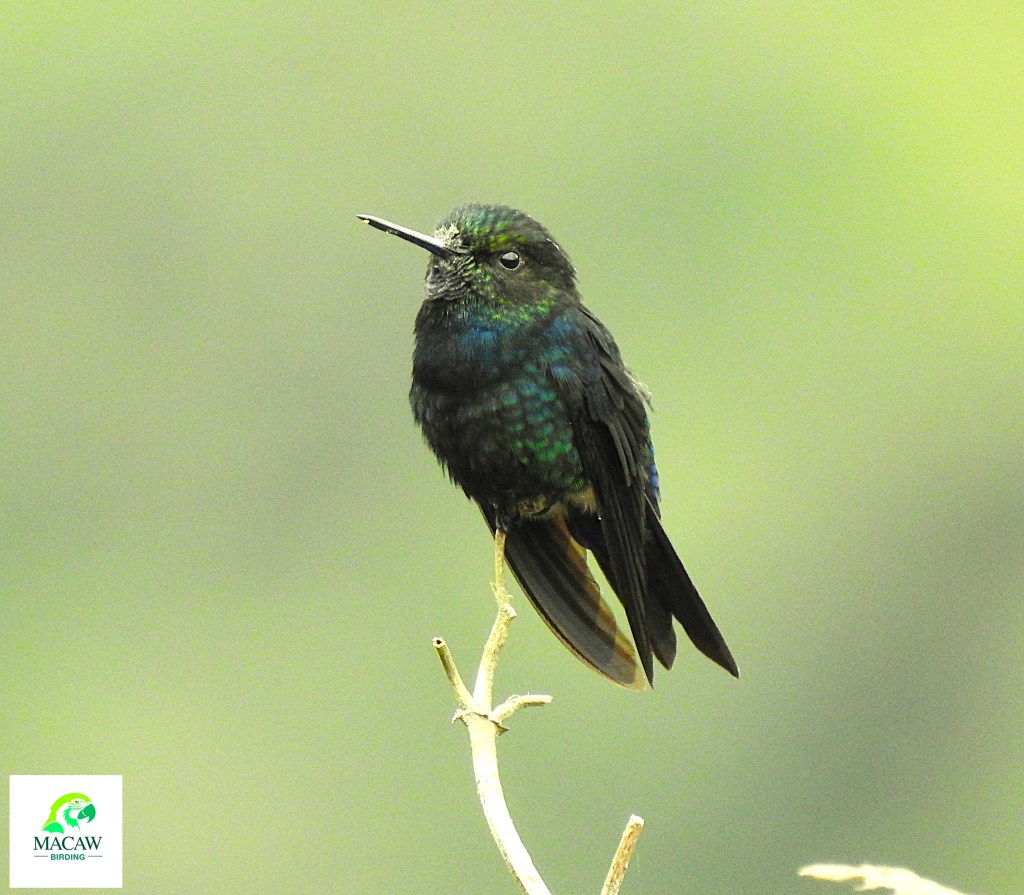
Black-breasted Puffleg © Juan Carlos Crespo
We’ll get an early start this morning, picking you up from your hotel in Quito just before sunrise to begin the hour-long drive to Yanacocha. On the way, we’ll pass the most important mountain in Quito—Pichincha. Its twin peaks, Rucu Pichincha (Old Pichincha) and Guagua Pichincha (Young Pichincha), often shrouded in clouds, dominating the city skyline.
Our route will take us along a paved road that winds around this majestic mountain, later transitioning to a dirt road within a peaceful temperate forest where our birding adventures will begin.
By early morning, we’ll arrive to Yanacocha Reserve that’s managed by the Jocotoco Foundation, a non-profit organization dedicated to preserving Ecuador’s birds, this reserve plays a critical role in protecting the fragile Highlands cloud forest ecosystem and its threatened and endemic species.
Target birds: Black-breasted Puffleg, Scarlet-bellied Mountain Tanager, Sword-billled Hummingbird, Hooded Mountain Tanager, Andean Guan, Black-chested Mountain Tanager, Equatorial Antpitta, Golden-breasted Puffleg, Shining Sunbeam, Superciliated Hemispingus, Blue-backed Conebill, Great Sapphirewing, Glossy Flowerpiercer, Barred Fruiteater, Andean Pygmy-Owl, Golden-crowned Tanager, and many more.
Following a busy morning of birding, we’ll enjoy a relaxing lunch at Yanacocha Reserve, known for its delicious Ecuadorian cuisine.
Then, we will drive down into the valley through the Hummingbird Ecoroute dirty road, descending to 1,700 meters (5,577 feet above sea level). This elevation provides a unique opportunity for us to explore the enchanting, subtropical cloud forest habitat, known for its lush vegetation and diverse wildlife.
Target birds: Red-crested Cotinga, Andean Lapwing, Brown-backed Chad-Tyrant, White-capped Dipper, and tanagers in mixed flocks.
Later this afternoon we’ll arrive at the Alambi Cloud Forest Reserve, your first taste of Ecuador’s fabled cloud forests. Situated along the well-known Tandayapa Bird Route, Alambi is renowned for its exceptional birdwatching opportunities making it a favored stop for spotting a wide variety of avian species, including some quetzals, a rainbow of tanagers, and delicate hummingbirds.
Target birds: Torrent Duck, Red-headed Barbet, Golden-headed Quetzal, White-whiskered Hermit, Silver-throated Tanager, Rufous Motmot, Flame-rumped Tanager, Golden Tanager, White-lined Tanager, Andean Emerald, Long-billed Starthroat, White-booted raquet-tail, Green-crowned Brilliant, Crowned Woodnymph, Brown Inca, Purple-throated Woodstar and many others.
Overnight Mindo
DAY 2: TANDAYAPA CLOUD FOREST UPPER & LOWER VALLEY

Plate-billed Mountain Toucan © Alberto Benito
This morning we’ll venture deep into the Cloud Forest Tandayapa Valley. Particularly good place for spotting the Plate-billed Mountain-Toucan. Listen closely, and you may hear the remarkable duets of these avian partners. The rattles and clicks of their amorous exchange can be heard more than a mile away.
Target birds: Plate-billed Mountain Toucan, Toucan Barbet, White-faced Nunbird, Tanager Finch, Ocellated Tapaculo, Grass-green Tanager, Gorgeted Sunangel, Golden headed and Crested Quetzal, Violet-tailed Sylph, Empress Brilliant, Powerful Woodpecker, Plushcap, Black-eared Hemispingus, Rusty-winged Barbtail, Striped Woodhunter, Plain-tailed Wren, Common Potoo, and many others.
In the afternoon, we’ll head to the lower Tandayapa Valley. Home to a staggering variety of bird species, it’s also known as the “Hummingbird Capital of the World.” Prepare to be dazzled by the kaleidoscope of hummingbird species, each flaunting its unique iridescence and vibrant plumage as they flit about in their natural habitat.
Beyond its avian riches, Tandayapa Valley is known for its stunning natural landscapes. Ethereal, mist-shrouded forests, crystal clear rivers, and dramatic topography make this a magical place for nature lovers and photographers to explore.
Target birds: Metallic-green Tanager, Chestnut-breasted Chlorophonia, Scaled Fruiteater, Rufous-gaped Hillstar, Brown Inca, White-throated Daggerbill, Golden-naped Tanager, Golden Tanager, etc.
Overnight Mindo
DAY 3: PAZ DE LAS AVES REFUGE & MINDO CLOUD FOREST
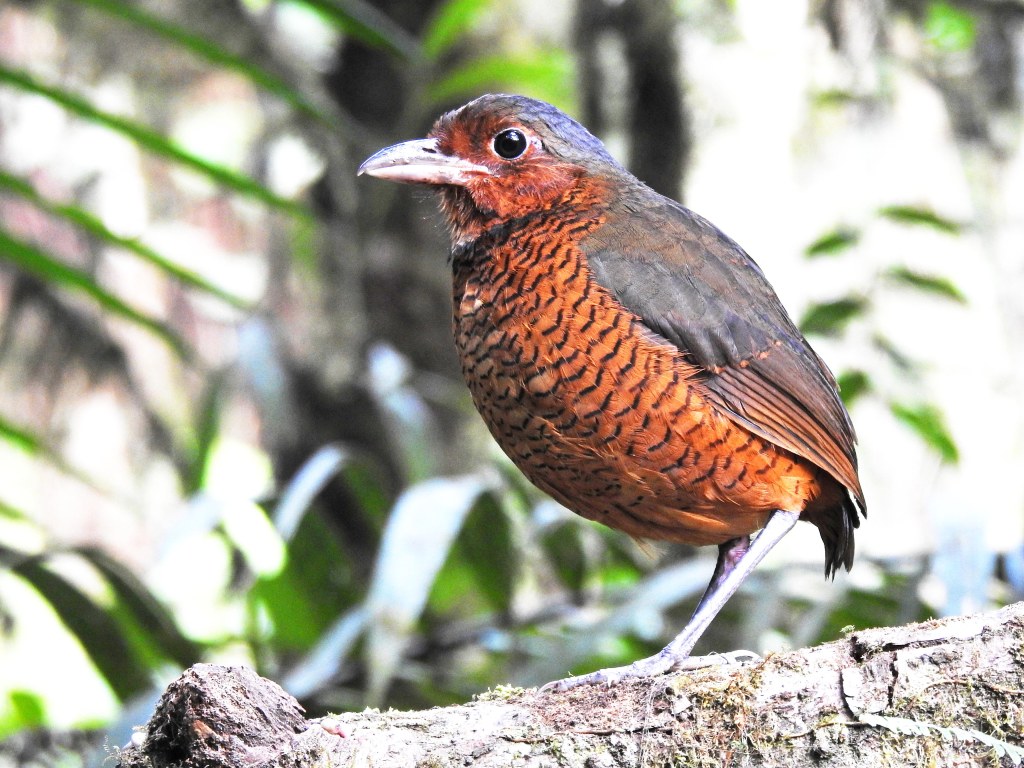
Giant Antpitta © Alberto Benito
Very early departure to make our way from Mindo to Paz de las Aves Refuge where you’re in for a real treat. This morning we’ll visit an Andean Cock of the Rock lek.
Males gather here to engage in flamboyant displays, showcasing their distinctive red plumage, performing calls, and dancing, essentially doing their very best to outshine the competition for discerning females. Leks are arenas for sexual selection, allowing females to assess the genetic fitness and vitality of potential mates, ensuring reproductive success of the species.
Target birds: Andean Cock of the Rock, Giant Antpitta, Yellow-breasted Antpitta, Ochre-breasted Antpitta, Chestnut-crowned Antpitta, Toucan Barbet and tanagers like Blue-winged Mountain Tanager, Golden-naped, Flame-faced, Black-capped Tanager, potencially Cloud-forest Pygmy Owl, Orange-breasted Fruiteater and Moustached Antpitta.
In the afternoon, we’ll head towards Mindo. In addition to being a delightfully picturesque destination, the little town of Mindo is a prime example of sustainable and friendly tourism in Ecuador. Many lodges and accommodations in the area prioritize sustainable practices and offer guests an immersive and responsible experience in nature.
Target birds: Sunbittern, Chocó Toucan, Coopman’s Elaenia, Ecuadorian Seedeater, Pacific Hornero, Pacific Antwren, Yelow-tailed Oriole, Olivaceous Piculet, Yellow-throated Toucan, Crested Guan, Bay Wren, Spotted Woodcreeper, Buff-fronted Foliage-Gleaner, Blue-necked Tanager, Rufous-throated Tanager, Guira Tanager, Lanceolated Monklet, White-throated Spadebill and many others.
Overnight Mindo
DAY 4: MASHPI-AMAGUSA RESERVE & GUAYABILLA-LA DELICIA ROAD
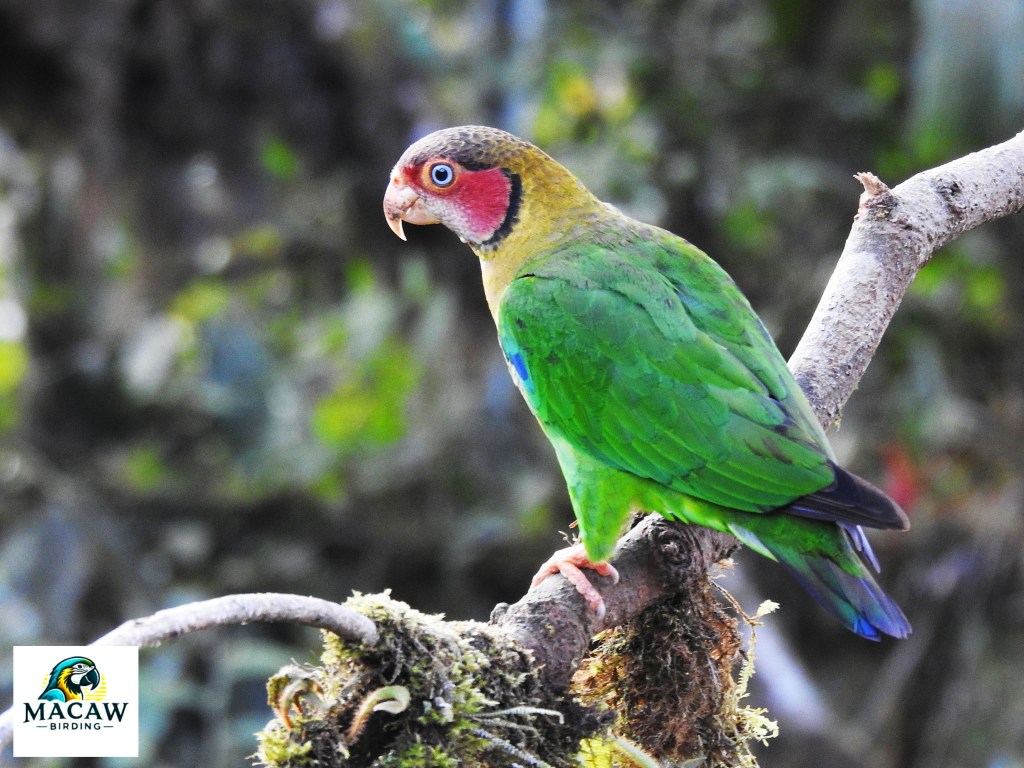
Rose-faced Parrot © Alberto Benito
This early morning’s birding adventures will begin at Amagusa Reserve, a local private reserve with a great diversity of chocoan cloud forest upper foothills birds. We’ll focus on Back Solitaire, Uniform Treehunter, Rose-faced Parrot, Dark-backed Wood-Quail, Moss-backed Tanager, Orange-breasted Fruiteater, Indigo Flowerpiercer, Scaled Fruiteater, Zeledon’s Antbird, sometimes Rufous-brown Solitaire and Chocó Vireo in mixed flocks.
We’ll encounter more particularly gorgeous hummingbird species, among them, the Velvet-purple Coronet dazzles with its deep purple crown and throat. The Empress Brilliant boasts majestic iridescent green plumage, while the petite Green Thorntail charms with its sweet little criss-crossing tail feathers.
Target birds: White-tipped Sicklebill, Indigo Flowerpiercer, Moss-backed Tanager, Black Solitaire, Esmeraldas Antbird, Orange-breasted Fruiteater, Rufous-rumped Antbird, Scaled Fruiteater, Rufous-brown Solitaire, Chocó Vireo, Glistening-green Tanager, Rose-faced Parrot, Golden-collared Honeycreeper, Rufous-throated Tanager, Velvet-purple Coronet, Empress Brilliant, Green Thorntail, Brown Inca, Green-fronted Lancebill.
At mid-morning we’ll birding on the road along the main entrance of Amagusa reserve to search for the fascinating Green-fronted Lancebill whose distinctive bill, nearly as long as its tiny body, is perfectly adapted for extracting nectar from deep within its favorite flowers.
Another great hummingbird to look in the same area is the unique White-tipped Sicklebill, that posee an incredible curved hooked bill well adaptated to suck nectar on specific Helicolinia sp. flowers.
As the morning progresses, we’ll head back to the road towards Guayabillas – La Delicia, two small villages in the Chocoan lower Foothills. Along the way, we will observe firsthand how the composition of bird species changes with the elevation, from the hardy paramo specialists that thrive in the highlands to a vibrant array of foothill and lowland avifauna.
One particularly fascinating bird in this area is the Black-tipped Cotinga (Carpodectes hopkei). This species stands out with its striking all-white plumage, an exceptional adaptation for blending into the bright clouds and mist of the forest canopy. Its unique appearance will certainly delight, should we be lucky enough to spot one.
Target birds: Black-tipped Cotinga, Scarlet and white Tanager, Yellow-green Tanager, Blue-fronted Parrotlet, Gray-and-Gold Tanager, Golden-hooded Tanager, Emerald Tanager, Slate-colored Grosbeak, Russet Antshrike, Slaty-capped Shrike-Vireo, Crested Guan, Pacific Flatbill, White-throated Thrush, and more.
Overnight Mindo
DAY 5: UMBRELLABIRD RESERVE & MILPE BIRD SANCTUARY
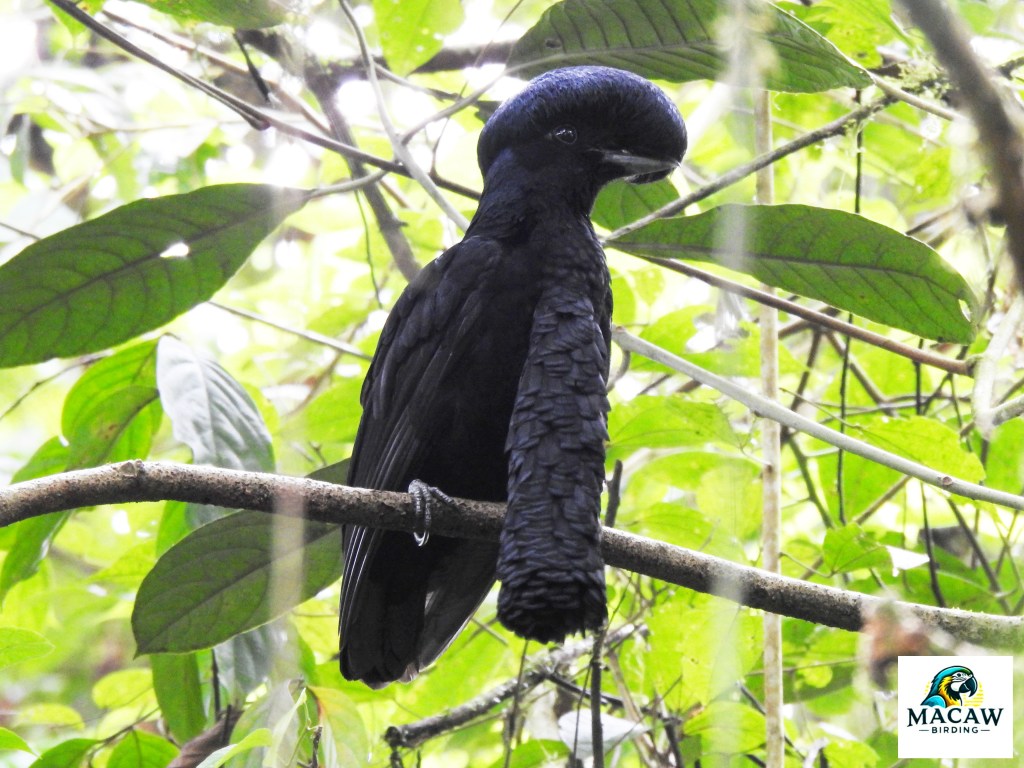
Long-wattled Umbrellabird © Juan Carlos Crespo
We want to arrive at the Long-wattled Umbrellabird Lek by 6:00 am and it’s a bit of a drive, so we’ll be departing a little earlier than usual this morning.
One of the most remarkable features of the male Long-wattled Umbrellabird is its striking long wattle, which dangles from its throat like an elaborate black umbrella, but their ability to fly between tall canopy trees with agility and grace is equally impressive.
During their displays, males may fly between trees to exhibit their agility and strength to attract the attention of females. This behavior adds an extra dimension to their courtship displays, making it not only a visual but also an aerial spectacle.
Target birds: Long-wattled Umbrellabird, Velvet-purple Coronet, Brown Inca, Violet-tailed Sylph, Chocó Toucan, Club-winged Manakin, Cloud-forest Pygmy-Owl and many others.
Later today, we’ll enjoy more birding along the way to Milpe Bird Sanctuary. At Milpe, we’ll spot more species along well-maintained trails that meander past breathtaking views of lush greenery and serene streams.
Target birds: Blue-tailed Trogon, Pale-vented Thrush, Club-winged Manakin, Ashy-throated Chlorospingus, Chocó Warbler, Speckled Nightingale Thrush, Yellow-collared Chlorophonia, Tawny-breasted Flycatcher, Golden-winged Manakin, and more.
Depending on the weather, we’ll embark on an owling adventure in search of two exquisite species – the Mottled Owl and the Crested Owl, known for its especially pronounced ear tufts.
Overnight Mindo
DAY 6: RIO SILANCHE BIRD SANCTUARY & VICINITIES
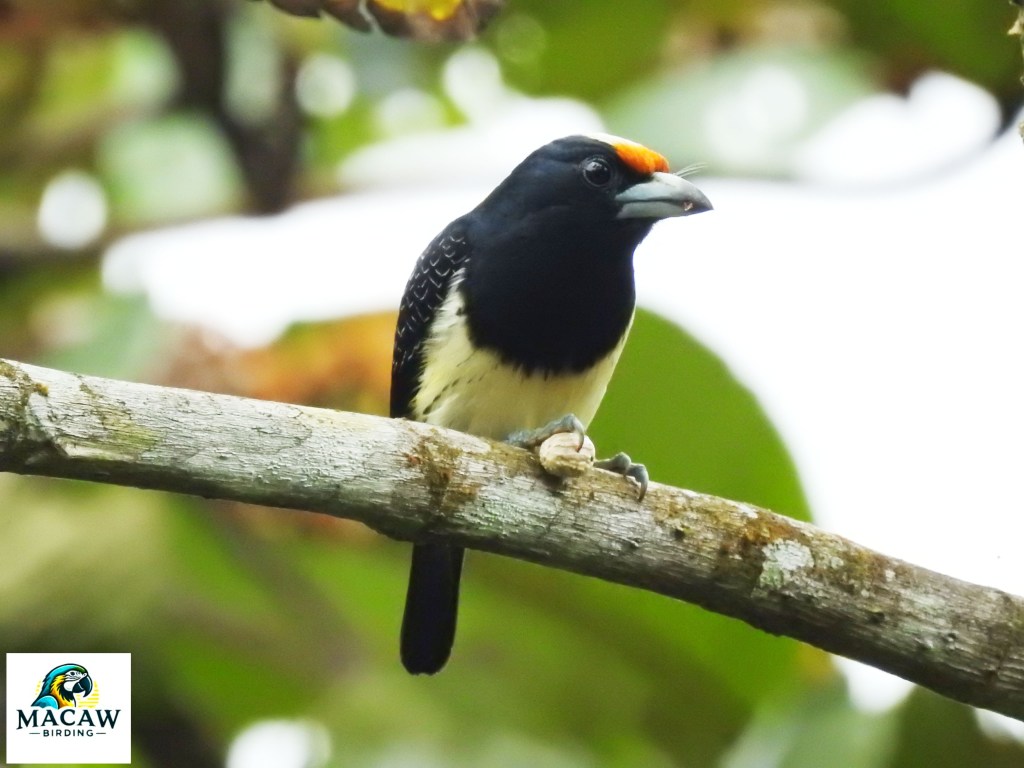
Orange-fronted Barbet © Juan Carlos Crespo
We’ll begin our day in the Rio Silanche Bird Sanctuary, a small patch of Chocoan lowlands forest owned by Mindo Cloud Forest Foundation. One of its notable features is the canopy tower, that will bring us right up into the treetops for a close-up view of many tanagers, trogons, woodpeckers, flycatchers, barbets, parrots, and many other canopy-dwelling in their natural habitat.
Target birds: Orange-fronted Barbet, Rufous-winged Tanager, Blue-whiskered Tanager, Scarlet-browed Tanager, Gray-and-gold Tanager, Scarlet-breasted Dacnis, Cinnamon Woodpecker, Guayaquil Woodpecker, Black-faced Dacnis, Green Honeycreeper, White-tailed Trogon, Barred Puffbird, Purple-throated Fruitcrow, Chocó Tyrannulet and many others.
We will also have an opportunity to look for manakins, other tanagers, woodcreepers, and antbirds on a short hike through Rio Silanche’s wooded trails, later this morning.
Target birds: Berlepsch’s Tinamou, Checker-throated Stipplethroat, Velvety Manakin, Northern-barred Woodcreeper, Black-striped Woodcreeper, Tawny-faced Gnatwren, Tawny-crested Tanager, and many others.
We’ll continue birding outside the Sanctuary along the dirthy road on secondary woodlands and agricultural areas by Silanche general area.
Target birds: Rufous-tailed Jacamar, Ecuadorian Ground-Dove, Thick-billed Seed-Finch, Black-crowned Antbird, Pale-vented Pigeon, Pacific Hornero, Gray-capped Flycatcher, White-thighed Swallow, Southern Rough-winged Swallow, Gray-breasted Martin and others.
Later in the morning we’ll have a short visit to Sendero Frutti Tour, a local private farm located near Silanche. This farm was initially built to make tours with local visitors to show them tropical fruits like cacao and passion fruits crops. Later, the owner chance his mind and decided to open his farm to watch birds setting up many feeders for hummingbirds and tanagers mainly.
Target birds: Black-breasted Mango, Long-billed Starthroat, Bronzy Hermit, Purple-crowned Fairy, Little Cuckoo, Pacific Antwren, Great Antshrike, Yellow-rumped Cacique, Sooty-headed Tyrannulet, Lineated Woodpecker and many others.
By early afternoon begin our drive to Canandé Reserve in Esmeraldas Province. We’ll have a short stop to enjoy a nice lunch at Puerto Quito city and then we’ll keep rolling to Canandé. Once we arrive at the reserve and do our accomodation, we’ll have a short time birding at the canopy tower by the main area of the reserve before sunset. Here will focus on tanagers mixed flocks, parrots, macaws, some toucans, flycatchers, Tityras, etc.
Target birds: Golden-hooded Tanger, Blue Dacnis, Mealy Amazon, Great-green Macaw, Blue-headed Parrot, Long-tailed Tyrant, Red-rumped Woodpecker, etc.
Overnight Canandé
DAY 7: RESERVA RIO CANANDE UPPER PART

Scarlet-breasted Dacnis © Juan Carlos Crespo
Canandé Reserve is owned by Jocotoco Foundation and is one of the last chocoan lowlands remanent forest. Our morning at Canandé starts just after dawn and will be a very exciting day because we’ll explore the upper part of the reserve, that’s one of the best spots in terms of chocoan lowlands specialties that inhabit the understory, midstory and canopy forest.
Target birds: Sapayoa, Band-tailed Barbthroat, Great Tinamou, Lita Woodpecker, Velvety Manakin, Dot-winged Antwren, Moustached Antwren, Ocellated Antbird, Spotted Antbird, Black-tipped Cotinga, Chocó Manakin, Baudó Guan, Rufous Piha, Stub-tailed Antbird, Great Jacamar, Purple Quail-Dove, Golden-chested Tanager, Banded-ground Cuckoo, and more.
In the evening, we’ll go on a night hike to look for the the Chocó Poorwill and the Chocó Screech-Owl , both endemic species to the Chocó bioregion. One of the most distinctive features of the Chocó Poorwill is its call. During the breeding season, males produce a repetitive and loud “poor-will” call, which gives the bird its common name. This call is often heard echoing through the forest at night. Like many species in the Chocó region, the Chocó Poorwill faces habitat loss and fragmentation due to deforestation and human activities.
The Chocó Screech-Owl a relatively small owl species. Its small size and cryptic plumage can make it a challenging bird to spot in the dense vegetation, but we’ll use its distinctive vocalizations, which can include a series of thrilling and whinnying calls, to help locate this elusive owl.
Target birds: Chocó Poorwill and Chocó Screech-Owl
Overnight Canandé
DAY 8: RESERVA RIO CANANDE LOWER PART & RETURN TO QUITO
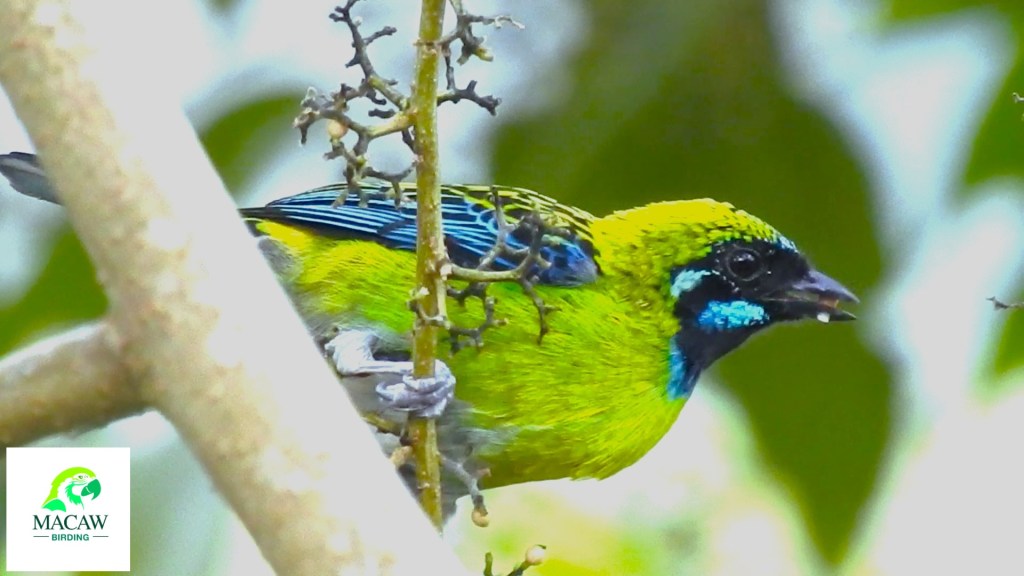
Blue-whiskered Tanager © Juan Carlos Crespo
We’ll explore and birding most of the morning at different trails of the lower part of the reserve searching for species that are most of the time in the lower understory like quails, antbirds, wrens, hummingbirds and understory like manakins, some tanagers, trogons, mourners, and well go again to the canopy tower to spot canopy dewellers bird species.
Target birds: Blue-whiskered Tanager, Rufous-winged Tanager, Scarlet-breasted Dacnis, Tawny-faced Quail, Bicolored Antbird, White-flanked Antwren, Tawny-faced Gnatwren, Song Wren, Black-throated Trogon, Blue-tailed Trogon, Red-capped Manakin, Speckled Mourner, and many others.
After exploring and discovering beautiful birds at this great place, we’ll have our farewell lunch and then will be ready to departure from the reserve and then will drive back to Quito. We’ll arrive in the late afternoon in Quito and drop you off at your hotel or airport.
End of services and see you in another great new adventure!!!!!!!.
IMPORTANT TOUR ISSUES
DOCUMENTS YOU WILL BE REQUIRED BEFORE STARTING TOUR
*You will need a current passport valid for at least six months before the expiration date.
SIZE OF THE GROUP
Two to Eight people
ACCOMMODATION
Regular to comfortable
INCLUSIONS
*All meals, starting with box breakfast on day one and finishing with luch on day eight.
*All lodgings during the tour.
* Private local guide and private transport.
*All entrances fees to private reserves and National Parks.
* Drinking water during the whole trip. We highly recommend bringing your own bottle to avoid generating plastic garbage.
*Pick-up and Drop off at your hotel or Airport
EXCLUSIONS
*International and domestic flights are not included.
*Visa fees
*Drinks
*Items for personal use
*Phone calls, laundry services, etc.
*Tips for guides, drivers, lodging staff, etc. are not included
HEALTH
Required good health conditions because we’re going to spend many hours on foot walking on dirt roads. We may have hot temperatures in the lowlands and very cold temperatures in the highlands.
BOOKING MODIFICATIONS
Requests for modifications to your reservation, such as date changes or participant adjustments, are subject to availability and may incur additional fees. We will do our best to accommodate your request.
FORCE MAJEURE
In the event of unforeseen circumstances or force majeure events (e.g., natural disasters, government actions, pandemics, etc.) that prevent you from participating, we may offer rescheduling options or travel credits for future use.
TRAVEL INSURANCE
We highly recommend purchasing travel insurance to protect your investment in case of unexpected cancellations due to personal emergencies, health issues, or other unforeseen events.
If you have any questions or need further assistance about this tour, please don’t hesitate to contact us.
Thank you very much for choosing Macaw Birding, and we look forward to providing you with exceptional experience!!!!!.
Contact
Juan Carlos Crespo
Mobile: (+ 593) 985800580
Email: juancarloscrespo@macawbirding.com
Quito, Ecuador

 macawbirding.com